



In the search for more sustainable use of the planet’s resources, hydrogen is increasingly considered one of the energy carriers of the future. One possible source for producing it is aluminium waste. Theoretically, one kilogram of pure aluminium can produce enough hydrogen to fully charge around 30 medium-power laptops. Dr. phys. Līga Grīnberga, lead researcher at the Energy Materials Laboratory of the Institute of Solid State Physics, University of Latvia, explains whether this technology could become part of more environmentally friendly energy solutions in the future.
Hydrogen – the “candy” of energy
Hydrogen is the most abundant and the lightest chemical element in the Universe. Under normal conditions, it is a colourless, odourless and tasteless gas. Today, hydrogen is mainly used in oil refining, ammonia and methanol production, as well as in the food industry, for example in the production of hydrogenated vegetable fats known as margarine.
However, increasing attention is being paid to hydrogen as an energy carrier. Within the LACISE project, implemented under the Swiss-Latvian cooperation programme, scientists from the University of Latvia Institute of Solid State Physics, Riga Technical University and the Paul Scherrer Institute in Switzerland are working together to study more environmentally friendly ways of producing hydrogen.
“It is important to understand that hydrogen is not a primary energy source, like the sun or wind. It is more like a candy – first you need to spend energy to unwrap it, and only then can you eat the candy and obtain usable energy. Hydrogen can help store renewable energy at times when more energy is produced than can immediately be consumed. When hydrogen is used in a fuel cell, electricity and water are produced, but the overall environmental impact depends on how the hydrogen was obtained,” explains Līga Grīnberga.
Researchers at the University of Latvia Institute of Solid State Physics are currently studying how different household and industrial aluminium wastes react with water in an alkaline environment. In the next stage of the research, reactions in seawater will also be tested.
“We analyse aluminium content and alloy composition, impurities, coatings, particle size, alkaline concentration, temperature, reaction rate and the amount of hydrogen produced. The results show that hydrogen release is significantly affected by both aluminium content and the structure and coatings of the material. Our goal is to develop an efficient method for recycling heterogeneous aluminium waste while simultaneously obtaining hydrogen, heat and potentially usable by-products,” says the lead researcher.
What happens in the reaction vessel?
When aluminium comes into contact with water, it attracts oxygen from the water and turns into aluminium hydroxide – a white gel-like or powdery substance. Hydrogen is released in gaseous form. Aluminium hydroxide can be used in the production of aluminium oxide, ceramics, sorbents, flame-retardant additives and other materials.
However, ordinary aluminium does not immediately react with water because it is protected by a very thin but durable aluminium oxide layer. To start the reaction, this protective layer must be removed or damaged using an alkaline solution, mechanical treatment or another activation method.
Pure aluminium reacts well with water, but using newly produced aluminium from ore for this purpose would not be efficient because aluminium production requires a great deal of energy and the metal itself is more valuable. Therefore, researchers focus on waste with medium or low aluminium content, including laminated or fragmented waste that is otherwise difficult to recycle.
How does this method differ from other hydrogen production methods?
Hydrogen can also be produced through electrolysis or from natural gas. The final product is always the same hydrogen molecule, but the production process, costs and environmental impact differ.
A large share of hydrogen is currently produced from natural gas, which creates carbon dioxide emissions. These emissions can be captured and stored, but this increases costs. In electrolysis, electricity is used to split water. If the electricity comes from wind, solar or hydropower, the resulting hydrogen is called green hydrogen.
The aluminium reaction itself does not require electricity, but energy was previously used to produce aluminium, so the method cannot automatically be considered “green” or economically advantageous. The greatest benefits are achieved when difficult-to-recycle waste is used, heat generated during the process is collected, alkaline solutions are recovered and reaction products are reused.
The process starts with waste sorting
The first step in producing hydrogen from aluminium is collecting and sorting aluminium-containing waste. The material is then prepared for the reaction: some materials only require crushing, while others need coatings removed or longer reaction times.
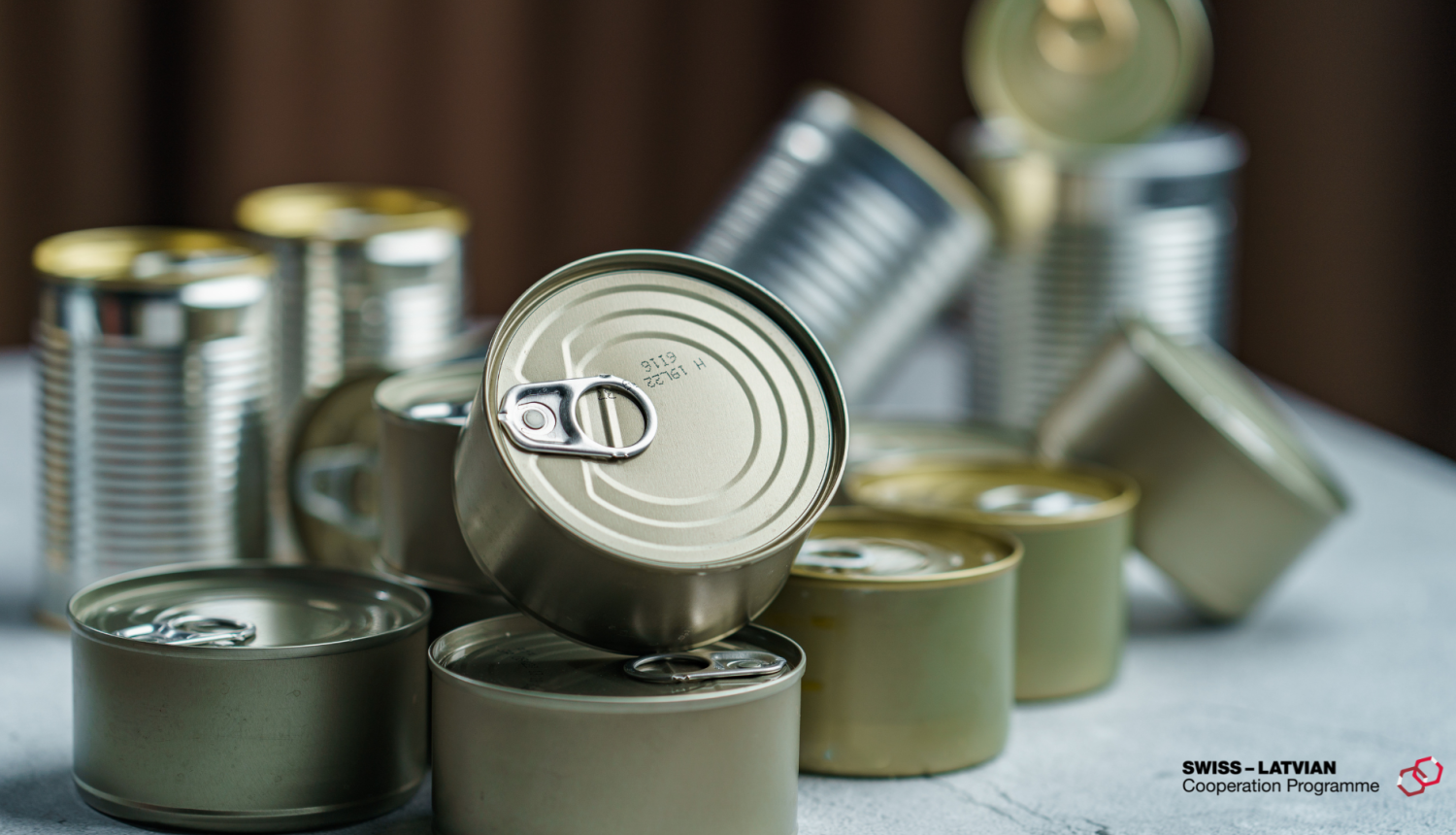
Potential sources include beverage cans, foil, old window frames, production leftovers, medicine packaging, wires and laminated materials. However, each type of waste reacts differently.
How safe is it?
Hydrogen is highly flammable and can be explosive under certain conditions. However, it can be used safely if equipment is properly designed. Appropriate ventilation, hydrogen sensors, safety valves, pressure and temperature controls, flame arresters and automatic reaction shut-down systems are required.
How much energy can be obtained from one kilogram of aluminium?
Theoretically, one kilogram of pure aluminium can produce 0.11 kilograms of hydrogen containing approximately 3.7 kWh of chemical energy. A fuel cell could convert this into around 2 kWh of electricity. This would be enough for a 10-watt LED bulb to operate for approximately 200 hours or to fully charge around 30 medium-power laptops.
The future of the technology
The reaction between aluminium and water is well known, and demonstrations have already shown that specially activated aluminium powders and alloys can rapidly produce hydrogen at room temperature. However, this method has not yet become a widely used industrial technology.
In the future, aluminium waste could become a niche energy resource, especially in locations where small or medium amounts of hydrogen are needed on demand and the heat generated in the reaction can also be used.
“Similar to other research worldwide, our laboratory study is currently at the stage of laboratory experiments and early prototype development. We are paying particular attention to aluminium waste with medium aluminium content available in Latvia. More time will be needed, but if an economically viable process can be developed, such aluminium waste could become a valuable resource in the circular economy,” concludes the lead researcher.
About the programme
The Swiss-Latvian cooperation programme “Applied Research” is part of Switzerland’s contribution to reducing economic and social disparities within the European Union, strengthening bilateral cooperation between Switzerland, partner countries and the European Union. The programme supports the development of Latvian science and innovation by funding projects in smart materials, information technologies and smart energy. It is implemented by the Ministry of Education and Science in cooperation with the Latvian Council of Science.